Wednesday, August 12, 2015

Preparing for the First Dental Visit

Take you child to see the Dentist by his or her first birthday. Your child’s first visit to the dentist can be a pleasant adventure. Talk about the visit in a positive matter-of-fact way, as you would any important new experience. Explain that the dentist is a friendly doctor who will help the child stay healthy.

During the first visit, the child’s mouth will be examined for tooth decay and other problems. The teeth may be cleaned by the dentist or Dental Hygienist. The dentist will explain how the child’s teeth should be cleaned at home, how diet and eating habits affect Dental Health and methods to ensure that your child gets sufficient fluoride.
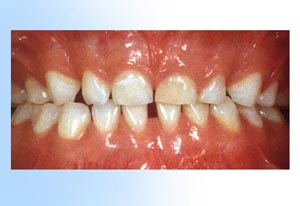

Most children have a full set of 20 primary teeth by the time they are three years old. Primary teeth are just as important as permanent teeth, for chewing, speaking, and appearance. In addition, the primary teeth hold the space in the jaws for the permanent teeth.

You should start brushing the child’s teeth as soon as the first tooth erupts. Flossing should begin when all the primary teeth have erupted, usually by age 2 to 2 ½. By age 4 or 5, the child may be able to brush his or her own teeth under supervision.

The pre-school years are an important time to help your child establish good eating habits, since you can control your child’s diet successfully. At this age, many children need to eat snacks or “mini-meals”. They cannot always eat enough food at mealtimes to get all the nutrients and energy they need. Help your child choose sensible snacks – foods that don’t promote tooth decay.


Tuesday, August 4, 2015

Infants

People usually think of a newborn baby as having no teeth. But the 20 primary teeth that will erupt in the next two and a half years are already present at birth in the baby’s jawbones. At birth, the crowns of the primary teeth are almost complete and the chewing surfaces of the permanent molars have begun to form. The front four teeth usually erupt first, beginning as early as six months after birth.


Your infant depends totally on you for Dental Care. You should begin cleaning the baby’s mouth during the first few days after birth. After every feeding, wipe the baby’s gums and teeth with a damp washcloth or gauze pad to remove plaque. This establishes, at an early age, the importance of Dental Hygiene and the feeling of having clean teeth and gums.

To clean your child’s teeth, place the child in a comfortable position that will allow easy access to his or her mouth.

Remember: Your infant depends totally on you for Dental Care!

Thursday, July 30, 2015

Fluoride Supplements

The most effective way for your child to get fluoride’s protection is by drinking water containing the right amount of the mineral… about one part fluoride per million parts water. This is of special benefit to children, because fluoride is incorporated into enamel as teeth form. Children who, from birth, drink water containing fluoride have up to 40% fewer cavities. Many of them remain cavity-free through their teens.


Fluoride is one of the most effective elements for preventing tooth decay. This mineral combines with tooth enamel to strengthen it against decay. Fluoride may also actually reverse microscopic cavities by enhancing the process by which minerals, including calcium, are incorporated into the teeth.

Even though your regular water supply may be fluoridated, it is still important to discuss with your Dentist any additional fluoride needs your child may have. Look for fluoride toothpastes and over-the-counter fluoride mouth rinses that carry the ADA seal. They have been proven safe and effective for their intended use. The advertising claims for these products have been reviewed by the ADA so the claims are accurate and not misleading.

Your Dentist may recommend various ways to get fluoride protection, including:
- Drinking fluoridated water at school.
- Taking prescribed fluoride tablets or drops.
- Brushing with a pea-sized amount of fluoride toothpaste after age two.
- Using a fluoride mouth rinse for children over age six.

Thursday, July 16, 2015

Simple Warning Signs of a Serious Condition

1. Do your gums sometimes bleed when you brush?
2. Do you have places in your gums that get red or sore?
3. Will bad breath just not go away?

These symptoms might not seem like much, but they could be the first signs of gum disease.

Every mouth has good and bad bacteria. Gum Disease occurs when millions of harmful bacteria have multiplied under your gumline and started an infection. Because the bacteria live and grow in pockets below the gumline, brushing and flossing cannot stop the infection. The best way to fight back is to visit a Dentist.

Consistent oral hygiene at home and regular visits to our office will keep your gums healthy. If left untreated, gum disease will get serious and could potentially lead to tooth loss or more serious health issues.

If you notice any bleeding or soreness in your gums, schedule an appointment with our office. Together, we can fight back against gum disease and keep your whole smile healthy.

"Timely, professional treatment is the only way to stop gum disease before it gets serious."

Wednesday, July 8, 2015

What is Baby Bottle Tooth Decay?

Baby bottle tooth decay is a form of decay than can destroy the teeth of an infant or young child. The teeth most likely to be damaged are the upper front teeth. These teeth are critical to you child’s smile. Other teeth may also be affected by this condition.

What Causes Baby Bottle Tooth Decay?

Baby Bottle Tooth Decay is caused by frequent and long exposure of a child’s teeth to liquids containing sugars. Milk, formula, fruit juices, and other sweetened liquids help to create this problem. The sugar in these liquids is used as an energy source by the bacteria in plaque.

Plaque is a thin, almost invisible film of bacteria and by-products that constantly form on everyone’s teeth. In the decay process, the bacteria produce acids which attach tooth enamel. The length of time these liquids are in contact with the teeth is critical. Longer and frequent exposures allow greater damage to occur.

Offering your child a bottle containing these liquids many times a day, as a pacifier, isn’t a good idea. Allowing your child to fall asleep with a bottle during naps or at night can cause serious harm and damage to your child’s teeth. During sleep, the flow of saliva decreases. This allows the liquids in the nursing bottle to pool around your child’s teeth for long periods of time.

Prevention

Sometimes parents do not realize that a baby’s teeth are susceptible to decay as soon as they appear in the mouth. By the time decay is noticed, it may be too late to save the child’s teeth. You can prevent this from happening to your child’s teeth by learning how to protect them:

- After each feeding, wipe the child’s teeth and gums with a damp washcloth or gauze pad, to remove plaque. Begin brushing your Child’s Teeth as soon as the first tooth erupts. Remember to continue cleaning and massaging the child’s gums in all other areas that remain toothless. Flossing should begin when all primary teeth have erupted, usually by age 2.

- Never allow your child fall asleep with a bottle containing milk, formula, fruit juices or sweetened liquid.

- If your child needs a comforter between regular feedings, at night, or during naps, fill a nursing bottle with cool water or give the child a clean pacifier recommended by your Dentist or pediatrician. Never give your child a pacifier dipped in any sweetened liquid.

- Avoid filling your child’s nursing bottle with any liquids such as sugar water, sweetened gelatin, and soft drinks.

- Make sure your child gets the fluoride needed for decay-resistant teeth. If you are not sure that your local water supply contains the right amount of fluoride, ask your Dentist about fluoride supplements.

- Start Dental Visits between six and twelve months of age. Make appointments regularly. If you suspect that your child has a dental problem, take the child to see a dentist as soon as possible.

Tuesday, June 23, 2015

Bleeding Gums Can Kill More Than Your Smile

Contrary to what you have been told, bleeding gums are not normal and shouldn’t be ignored. Would you be concerned if your hands bleed every time you wash them? Your gums are no different.

Bleeding that occurs when you floss, brush, or eat is usually caused by a bacterial infection and represents one of the first symptoms of gum disease (Periodontal Disease). Researchers are finding links between periodontal infection and other diseases of the human body. Heart Disease, Diabetes, Respiratory Disease, Osteoporosis, Artificial Joints, and Pregnancy complications seem to be connected to your oral health. The current theory is that bacteria present in infected gums breaks loose, travels though your bloodstream, and attaches itself to your heart or other body parts. A resent study found that 85% of heart-attack patients have periodontal disease, making this connection higher than the relationship between high cholesterol and heart attacks.

What Should You Do?

Keep your mouth healthy! It is not “just a cleaning” anymore. See your Dentist or hygienist at least twice a year for periodic maintenance and screening. Periodontal disease is often painless until it reaches more advanced stages, however there is a simple test that your dental team can use to uncover this problem even in its beginning stages. Like most diseases of the body early detection is essential. Also, remember to brush and floss. You will need to be an active participant in prevention. Gum disease is a serious infection that should always be taken seriously.

Take a Self-Evaluation Quiz

If you answer yes to any of the following questions you may have periodontal disease.
1. Do your gums bleed when you brush, floss, or eat?
2. Do your teeth feel like they are moving?
3. Are your gums receding?
4. Do your teeth look longer?
5. Do you have persistent bad breath?
6. Does your bite feel different?
7. Is it difficult for you to chew?
8. Have you noticed pus around your teeth? 9. Do your gums feel tender or look swollen?
10. Do your teeth or gums hurt?

Other Factors

Over 80% of adults have gum disease. Smoking, excessive alcohol, diet, and poor oral hygiene can contribute to the onset and progression of the disease, but genetics seem to play a significant role. If there is a history of gum disease or premature tooth loss with your parents or siblings your chance of having this disease is extremely high.

Treatments

A better understanding of this disease has created new treatment alternatives. Antibiotics, deep cleanings, laser treatments, mouth rinses, and homecare, used individually or in combination, are reducing the need for more aggressive options like Surgery.

Sunday, June 14, 2015

FREQUENTLY ASKED QUESTIONS

Q: Which type of toothbrush should I use?
A: The brand of the toothbrush is not as critical as the type of bristle and the size of the head. A soft toothbrush with a small head is recommended because medium and hard brushes tend to cause irritation and contribute to recession of the gums, and a small head allows you to get around each tooth more completely and is less likely to injure your gums. It's unnecessary to "scrub" the teeth as long as you are brushing at least twice a day and visiting your Dentist at least twice a year for cleanings.

Q: Is one toothpaste better than others?
A: Generally, no. However, it's advisable to use a fluoride containing toothpaste to decrease the incidence of dental decay. We recommend our patients use what tastes good to them as long as it contains fluoride.

Q: How often should I floss?
A: Flossing of the teeth once per day helps to prevent cavities from forming between the teeth where your toothbrush can't reach. Flossing also helps to keep your gums healthy.

Q: What's the difference between a "crown" and a "cap"?
A: These are restorations to repair a severely broken tooth by covering all or most of the tooth after removing old fillings, fractured tooth structure, and all decay. The restoration material is made of gold, porcelain, composites, or even stainless steel. Dentists refer to all of these restorations as "crowns". However, patients often refer to the tooth-colored ones as "caps" and the gold or stainless steel ones as "crowns".

Q: What's the difference between a "bridge" and a "partial denture"?
A: Both bridges and Partial Dentures replace missing teeth. A bridge is permanently attached to abutment teeth or, in some cases, implants. A partial denture is attached by clasps to the teeth and is easily removed by the patient. Patients are usually more satisfied with bridges than with partial dentures.

Q: What about "silver" fillings versus "white" fillings?
A: Although the U.S. Public Health Service issued a report in 1993 stating there is no health reason not to use amalgam (silver fillings), more patients today are requesting "white" or tooth-colored composite fillings. We also prefer tooth-colored fillings because they "bond" to the tooth structure and therefore help strengthen a tooth weakened by decay. While Fillings are also usually less sensitive to temperature, and they also look better. However, "white" fillings cannot be used in every situation, and if a tooth is very badly broken-down, a crown will usually be necessary and provide better overall satisfaction for the patient.

Q: Do I need to have a root canal just because I have to have a crown?
A: No. While most teeth which have had Root Canal Treatments do need crowns to strengthen the teeth and to return the teeth to normal form and function, not every tooth needing a crown also needs to have a root canal.